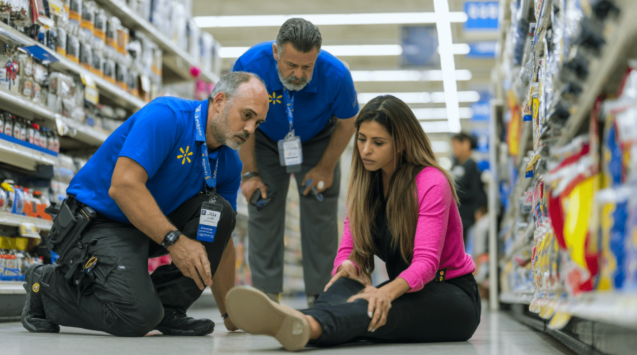
Ruth reached for a bag of green beans on a rainy Tuesday morning and her feet went out from under her, three steps past the misting case. She is 71, she apologized twice to the clerk who helped her up, and by the time her daughter called the personal injury attorneys Vineland NJ shoppers usually end up needing, the aisle footage from that morning was already gone. What Ruth signed at the customer service desk was a four-line form. That page is now the only record anyone has of how she got hurt.
I managed supermarkets for eleven years and wrote hundreds of those forms myself. The paperwork a store creates after a customer falls is built to protect the store, and the proof that would actually help the shopper starts expiring within days. Nobody at that desk is lying to you. They are following a process that was never designed with your claim in mind.
The Incident Report Is Written For The Store
The form has boxes because boxes are fast, and fast is what a manager needs at 10:15 with a line building at the registers. Name, date, department, short description, signature. What it has no room for is how long the water sat there, who walked past it, or when the produce crew last checked the mats. I usually see three or four sentences on a finished report, and two of them describe the customer rather than the floor. Whoever responded writes that description from memory, sometimes an hour later, between other tasks. If the shopper says she is fine, that sentence goes in, and it gets quoted back to her months afterward. The copy she carries home, when anyone offers one, is the same thin page.
The recordkeeping a store genuinely worries about covers its own employees. The OSHA Law Blog reported in February 2026 that Form 300A injury summaries were due electronically by March 2, with covered establishments required to file even when they logged no recordable injuries at all. A customer who goes down in aisle four appears on none of that. Her fall lives in one internal document, held by the company she may end up filing against.
See also: How to Fit a Barrel Sauna into a Small Backyard
Camera Footage Is Overwritten On A Clock
Most grocery systems hold 14 to 30 days of video, and the older stores I worked in ran closer to 14. The drive keeps its own calendar. Nothing is preserved because a fall happened; somebody has to pull the camera and the timestamp and export the clip. Ask in month two and there is nothing to hand over, not out of spite, just arithmetic.
Two clocks run after a fall, and the medical one matters more than the footage. An older adult who goes down should be checked by a doctor that same day even with no pain at the time, because hip fractures and slow bleeds do not announce themselves in the produce aisle. If her head struck anything, call 911 instead of waiting to see how she feels at dinner. Falls do get counted in the parts of working life somebody tracks, and CDC researchers reported that an estimated 81% of construction-worker fall injuries treated in U.S. emergency departments involved a ladder, with work-related ladder falls causing 113 deaths in 2011. No comparable count exists for the shopper who goes down between the mats.
Notice Is The Word That Decides Cases
A wet floor by itself decides nothing. What gets argued is notice, and the personal injury attorneys Vineland NJ residents call go after sweep logs and staffing schedules before they go anywhere near the store’s own summary of events. Lawyers use the term constructive notice, meaning nobody has to prove an employee saw the spill, only that it sat there long enough that a reasonably run store should have found it. Rules on premises claims vary from state to state, so what has to be proved in New Jersey is a question for a lawyer licensed here.
Mat Placement And Sweep Logs Tell More
Every chain I worked for had a sweep schedule and a laminated log by the back hall. In practice that log gets initialed in batches, three lines at once, at the end of a shift nobody had time for. The gap is worth more than the incident report, because it shows what the store’s own routine was supposed to be and exactly where it slipped. Rainy-season mats say the same thing: run them ten feet inside the door of a 40,000 square foot store and the water stops there, run them five and it rides the soles of everybody’s shoes down to the produce run.
Questions Worth Asking Any Injury Firm
A free first meeting is your chance to find out whether a firm moves on evidence or waits for the insurer to open a file. The answers tell you more than any website will. Ask these out loud and listen for specifics rather than reassurance.
- How soon do you send a preservation letter for the store’s video? A good answer is measured in days, not after the medical records arrive.
- Have you handled falls at a grocery store this size before? Listen for a named store type, not a general yes.
- What will you ask the store to produce besides footage? Sweep logs, staffing schedules and prior incidents at that same location should come up unprompted.
- Who calls me back, and how often? A good answer names a person and an interval.
Moving Early Preserves What Proves A Fall
Ruth’s case came down to a form she signed while she was embarrassed and a video that expired while she waited to see whether her hip settled down. Order matters here. See a doctor, photograph the floor and the mats before you leave if you are able to, get the names of anyone who helped, and have someone ask for the store’s evidence while it still exists. A store’s paperwork is a snapshot taken by the party with the most to lose, and everything around it is sitting on a timer. Whoever asks first is usually the only one who gets an answer.