Replace it. On a wind-exposed farmhouse that has already taken four patches in twelve years, a fifth patch is not a repair plan, and the residential roofing contractors Monticello IL homeowners keep calling back will say so before the walkaround is finished. The house in question is a 1962 two-story on three open acres west of town, 9/12 pitch, nothing upwind of it but a mailbox and a bean field. Four patches, four slightly different shades of gray, and the windward slope is failing again. The argument here is blunt: on an aging, exposed roof, a decade of patching costs more than replacing the whole assembly once, and the material matters far less than whether somebody picked it for that pitch and that wind.
The Patch Myth Falls Apart By Year Four
The myth is that a roof is a surface. Fix the spot that leaks, leave the rest alone, buy yourself a few more years. Reality is that a roof is a system, and the deck, underlayment, fasteners, flashing and field shingles all age on the same clock. Job after job, the same thing turns up when we lift a patch on a west-facing slope: granules gone from the courses around it, a mat that snaps instead of bends, nail heads that have worked their way proud of the shingle. New material bonded to that has nothing sound to hold onto. So the next leak shows up four feet away, then another one the following spring after the first hard blow out of the northwest, and every visit carries a service call, a minimum labor charge and one more mismatched bundle of shingles.
Year four is usually where the arithmetic turns against the homeowner. Say the patches on that farmhouse ran $700, then $850, then $1,100 as the crew had to open more of the slope each time, all illustrative numbers for a job of that size. Nobody adds them up, because they land years apart on separate invoices. The roof, meanwhile, is another year older across every square foot the patch never touched.
Shingles Today Are Not Yesterday’s Three Tabs
Ten years ago the default on a farmhouse like this was a three-tab shingle, a flat single-layer strip rated for wind somewhere in the 60 to 70 mph range. That product has largely left the residential market. What goes on now is a laminated architectural shingle: two layers bonded together, noticeably heavier, with a wider nailing zone and a wind rating well above the old three-tab. The difference shows up faster on three open acres than it ever would on a lot with mature maples along the west line. A roof with no windbreak fails at its fasteners and its edges long before the field wears out. On a 9/12 with that exposure, the nailing zone and the starter course decide how many winters the roof gets.
Metal Is Not Automatically The Longer Lasting Choice
Metal outlasts asphalt on paper, and on the right house it does in practice too. Standing seam with concealed clips on a steep pitch will go 40 years or more and ask almost nothing of you. Exposed-fastener panels are a different animal: the screws carry neoprene washers, washers dry out, and somewhere around year fifteen somebody is walking that slope re-torquing several hundred of them. Put that panel on a 9/12 with no windbreak and you have swapped a shingle you understand for a maintenance schedule you will forget. I have watched the same panel sit happily on a machine shed for twenty years, which says the panel is not the problem, the application is. Back to the house: the real question is not metal versus shingle, it is which assembly suits a steep, fully exposed slope and who stands behind the install.
That windward slope had been living on borrowed time since the second patch, and no material choice was going to change it. The honest comparison is total cost across the years you plan to own the place, not the price on a square. A licensed, bonded and insured crew with manufacturer warranties on the material affects how long that roof lasts more than the choice between the two products does.
Common Questions About A Full Roof Installation
How Long Does A Full Roof Installation Take?
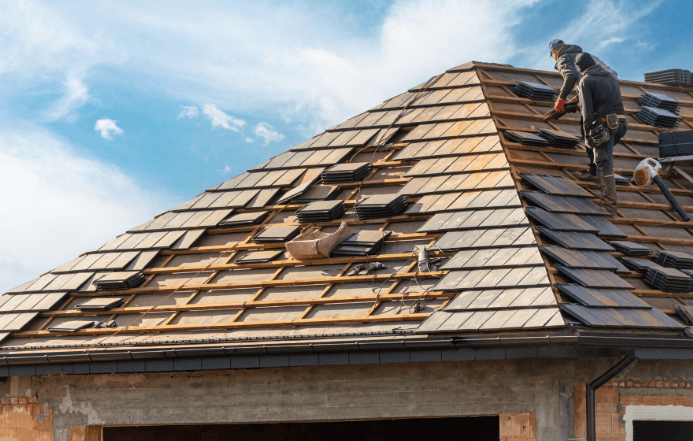
A house this size is usually a few days of work, weather permitting. A 9/12 pitch slows a crew down because everyone is on ropes or staging, so budget a day beyond what a low-slope ranch would need. Tear-off, dry-in and the first slope often happen the same day, which is the part that matters when rain is in the forecast.
Can I Just Roof Over The Old Shingles?
On some houses you can, and it is cheaper the day it happens. On a roof patched four times, a layover buries every soft spot in the deck instead of finding it. Tear-off costs more and is the only way anybody can honestly tell you what the sheathing under those patches looks like.
Do I Need A Permit Out In The Township?
Requirements vary by jurisdiction, and a house outside city limits does not always follow the same rules as one inside them. Ask whoever quotes the job to name the authority they pull the permit from and who schedules the inspection. A contractor who handles permits and inspections as part of the work should answer that in one sentence.
See also: Digital Marketing Trends for Australian Businesses
Replacing The System Beats Chasing The Symptom
There is a threshold where repair stops making financial sense, and it sits lower than most homeowners expect. This Old House drew that line at roughly 30% in an August 2026 cost breakdown: once repair costs exceed 30% of full replacement cost, replacement becomes the more economical choice. The farmhouse west of town crossed it around patch three and nobody noticed, because the invoices arrived years apart. Do the addition before you call anybody. If what you have already spent chasing one slope is creeping toward a third of a full installation, the next check should buy a roof instead of another summer. Homeowners who reach that point and sit down with residential roofing contractors Monticello IL trust usually find the estimate easier to stomach than the running total behind them.