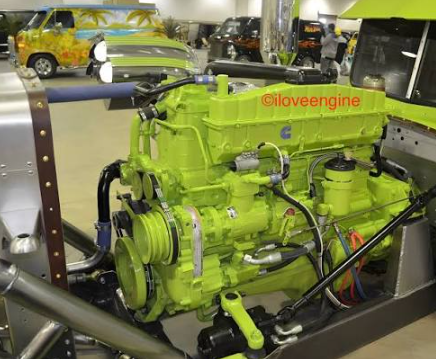
A cattle and hay outfit north of Ellijay called me on a Tuesday in June with a 1988 Big Cam grain truck parked at the edge of a cut field, diesel running down the side of the block, and about eleven days of good weather left on the forecast. Four parts counters had already told him the PT injection pump was discontinued, which is how a farmer ends up typing cummins parts atlanta ga into his phone at ten at night. Discontinued is a stocking decision, not a verdict on the truck. A pump nobody manufactures can still be rebuilt, and rebuilding the one you already own costs a fraction of a repower and usually takes one to two weeks, which is the whole argument of these notes. That work is most of what lands on my bench.
Parts Counters Quit Stocking These Pumps
Fifteen years ago a heavy-truck parts house in this part of Georgia kept a Big Cam core on the floor and a counter man who knew what a PTG was without looking it up. That is gone. The counter today is an electronic catalog, and when a part number supersedes to nothing, the screen says obsolete and the conversation ends there. Nobody is being lazy about it. A pump for a forty-year-old engine turns over maybe twice a year, and no branch manager stocks inventory that sits that long. So what usually turns up in its place is a repower quote, because a new engine is the product the system can actually sell. The farmer hears discontinued, prices an engine he did not want, and starts pricing whole trucks instead.
See also: How to Fit a Barrel Sauna into a Small Backyard
A Rebuilt Pump Beats A Repower On Price
A rebuild is not a patch. The housing goes on a calibration bench, plungers and springs get replaced, the drive shaft and governor weights get measured against spec, and the pump leaves flowing the fuel curve it was built to flow. The flow bench does not care what anybody hopes the pump is doing. Either the numbers land or it goes back apart.
Run the money on that grain truck. Say the rebuilt AFC PT comes back as an exchange unit at $2,400 with new plungers, a fresh drive shaft and a calibration sheet in the box. Six injectors popped and reset at $135 apiece adds $810. Pulling the pump and setting it back in is about six hours of shop time at $110 an hour, so $660. Lines, filters and a gasket set run another $180, and freight both directions on the core is $140. That comes to $4,190 all in, under the sixty-five hundred dollars the farm had set as its ceiling on the entire repair.
Now price the other road. A recon engine plus the labor to drop it in came back quoted somewhere near $21,000, and a used truck sound enough to pull a loaded hopper through a Gilmer County field starts higher than that. The reason a search like cummins parts atlanta ga lands anywhere useful is that a few shops still hold Cummins-certified remanufacturing and keep their own machine shop, so the pump gets rebuilt in the building instead of shipped off into somebody else’s queue. One to two weeks is the honest turnaround on most of these units. I would rather tell a man two weeks and hand him the pump on day nine than the reverse.
Keep The Old Grain Truck Through Hay Season
Season length decides this, not sentiment. A two-week cutting window does not wait on a repower schedule, and a truck that hauls forty loads a year does not need to be new, it needs to run in June. New iron is getting more expensive rather than less, too: Forbes wrote back in April 2026 that Section 232 tariffs on imported steel, aluminum and copper have raised costs across the $50 billion American heavy-duty truck industry. That pressure works its way into component prices as well, which is one more reason the pump already bolted to your engine is worth putting on a bench.
The Big Cam went back together on a Thursday and finished the season with days to spare. If a counter tells you the pump is gone, ask who rebuilds it before you ask what an engine costs. Obsolete means nobody is building it any more. It does not mean nobody can fix it.