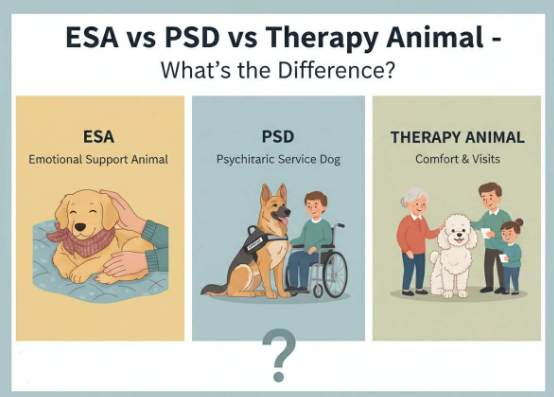
Choosing between an ESA vs PSD vs therapy animal can be confusing, especially when the terms are often used interchangeably. On the surface, they all seem to serve the same purpose—offering comfort and emotional balance. But legally and practically, they are very different. An Emotional Support Animal (ESA) relies on proper documentation from a licensed provider. A Psychiatric Service Dog (PSD) requires training to perform tasks that directly assist with psychiatric disabilities. A therapy animal plays a community role in schools, hospitals, or nursing homes without granting individual housing or travel rights.
The difference matters because each has its own requirements for verification, therapist licensure, renewal rules, and the way landlords or institutions review requests. Knowing these distinctions prevents costly mistakes, failed applications, or denied housing accommodations. In this guide, we’ll explore how they differ, the rules that govern them, and what templates or appeal options can help if your request is challenged.
Quick Answer
The debate of ESA vs PSD vs therapy animals often creates confusion because people assume they serve the same role. In reality, each has very different requirements and protections. An Emotional Support Animal (ESA) provides emotional stability for individuals struggling with mental health conditions. It does not need special training, but it does require valid documentation from a licensed professional. A Psychiatric Service Dog (PSD), on the other hand, is a specially trained dog that performs tasks designed to directly assist with psychiatric disabilities such as PTSD, severe anxiety, or depression. Finally, a therapy animal offers comfort to groups of people in schools, hospitals, and care facilities, but it does not give its owner any legal housing or travel rights.
The difference is critical because each comes with its own set of requirements, provider verification, documentation standards, and renewal rules. Knowing which category your animal falls into ensures you request the right accommodations and avoid unnecessary rejections.
Deep Dive on Rules
Breaking down the requirements of each category shows how they are recognized legally and practically.
Emotional Support Animal (ESA)
An Emotional Support Animal is defined through documentation, not training. To be valid, the animal’s status must be backed by a licensed mental health professional. The cost of an ESA letter varies depending on provider and package, but paying for a legitimate evaluation ensures the letter holds up under landlord review.
The most important step is obtaining a valid ESA verification. Only professionals with therapist licensure, such as psychologists, psychiatrists, or licensed clinical social workers, can provide a letter that will be accepted. Letters issued by unlicensed or generic online services are often rejected when landlords check their validity.
Housing protection for ESAs comes from the Fair Housing Act. Landlords must allow reasonable accommodation, even in buildings with “no pets” policies. However, they may refuse if the animal is dangerous, causes property damage, or threatens the safety of others. Tenants relying on their animals should be aware of housing rights and your ESA before making requests.
Renewal rules are not clearly defined under federal law. Still, most landlords require updated letters every 12 months to confirm that the tenant is still receiving ongoing care. This practice has become common even though no specific timeframe is written into the law.
The biggest mistake people make is using fake providers. Many websites promise instant approvals with no evaluation, but these letters typically fail when landlords ask for provider details or proof of state licensing.
Psychiatric Service Dog (PSD)
A Psychiatric Service Dog differs from an ESA in one defining way: training. While an ESA provides comfort by presence, a PSD performs trained tasks that mitigate psychiatric disabilities. These tasks might include alerting during panic attacks, waking someone from night terrors, or interrupting harmful behaviors.
A therapist’s role is still important. A diagnosis from a licensed mental health provider confirms the disability, but the PSD’s status comes from task training. Without trained functions, the dog cannot qualify as a service dog, no matter the handler’s condition.
Unlike ESAs, PSDs do not rely on yearly renewal letters. Their legal status is tied to the handler’s disability and the animal’s abilities rather than repeated documentation.
Legal protections for PSDs are stronger. Under the Americans with Disabilities Act (ADA), they are permitted in housing, workplaces, flights, and all public spaces. A landlord cannot deny a properly trained PSD, and businesses must accommodate them unless the dog is out of control or poses safety risks.
A common pitfall is assuming any pet dog can become a PSD with a label. Training is the core requirement. Handlers may be asked what tasks the dog performs, and vague answers like “emotional support” are not enough.
Therapy Animal
A therapy animal holds a different role altogether. These animals are trained or registered to provide comfort in community settings such as schools, hospitals, or nursing homes. They are not linked to an individual’s treatment plan, and their purpose is to comfort groups of people rather than one handler.
Unlike ESAs or PSDs, therapy animals do not require therapist licensure or medical documentation. They are often handled by volunteers or organizations that coordinate visits.
Housing rights do not extend to therapy animals. Landlords are not required to grant reasonable accommodation, and airlines are not obligated to recognize them. Their recognition is social, not legal.
Many owners mistakenly label their pets as therapy animals to seek housing rights. However, therapy animals provide no legal standing in these cases, making them very different from ESAs and PSDs.
See also: Reliable Digital Services 651075084 Security
Common Pitfalls
When people compare ESA vs PSD vs therapy animal, mistakes often come from misunderstanding documentation, training, and renewal rules.
One common pitfall is mixing up ESAs and therapy animals. An ESA has legal recognition under housing law, but therapy animals do not. Many tenants submit therapy certificates, thinking they work like ESA letters, only to face rejection from landlords.
Another mistake is relying on unlicensed providers. If a letter is not backed by a therapist’s licensure, landlords will likely deny it. Providers must be authorized to practice in the state where the tenant lives. This is where careful selection of services matters – choosing low-cost shortcuts usually leads to invalid letters.
Renewals are another area of confusion. Tenants sometimes assume one letter will last for years, but most housing providers require updated documentation annually. Failing to provide a renewal can result in accommodation being withdrawn. Understanding these renewal rules avoids sudden housing disputes.
For PSDs, the pitfall is training. Simply owning a dog while having a psychiatric condition does not create PSD status. The dog must be trained for specific tasks, and handlers must be able to describe them when asked. Saying “my dog comforts me” is not enough under ADA standards.
Examples and Templates
Documentation is the foundation of recognition for ESAs. A proper letter typically includes:
- Patient’s name and date
- Provider’s full name, credentials, and license details
- Confirmation of the mental health condition
- Statement that the ESA provides emotional support
- Provider’s contact information and signature
This structure ensures that landlords can verify the letter. Without these details, the request may be denied.
For appeals, tenants often write letters after a landlord rejects their request. An appeal letter should:
- Reference the Fair Housing Act.
- Include the provider’s updated verification.
- Emphasize the need for reasonable accommodation.
- Remain professional and factual.
Get ESA letter, professional documentation, appeal guidance, and renewal options directly through Paw Tenant so your ESA request stands strong with landlords and housing providers.
How Landlords Verify
Landlords typically check if the letter was issued by a professional with proper licensure. They may look up the provider’s credentials or call to confirm practice details. If the provider cannot be verified, the letter is considered invalid.
When to Renew
Renewals usually happen once a year. Even though there is no strict federal requirement, landlords commonly ask for updated letters to confirm ongoing treatment. Submitting renewals on time prevents disputes and avoids last-minute housing complications.
Appeal Letter Anatomy
An appeal letter should be polite, structured, and supported by updated documents. Tenants who provide renewed verification along with references to housing law have a stronger chance of success. Templates often help tenants organize these points without missing details.
For people who need multiple documents or ongoing updates, bundled packages can simplify the process. Instead of paying for separate letters each year, packages may include renewals, housing letters, and additional support materials.
Conclusion
The differences between ESA vs PSD vs therapy animal are not small—they shape legal rights, housing protections, and daily life.
- An ESA relies on proper verification and documentation from a licensed provider.
- A PSD depends on task-specific training and has the broadest protections under ADA.
- A therapy animal supports communities but carries no legal accommodation rights for owners.
Understanding provider requirements, renewal rules, and the limits of each category prevents costly mistakes. Proper documentation, verified providers, and clear communication with landlords or institutions ensure smoother experiences for both tenants and handlers.
FAQs
1. Do ESAs need training like PSDs?
No. An ESA only requires proper documentation, while PSDs must perform specific, trained tasks.
2. Can landlords deny ESAs?
Yes, if the letter is invalid, the provider is unlicensed, or the animal poses safety risks.
3. How often should ESA letters be renewed?
Most landlords request updated letters every year, even though federal law does not specify an exact timeframe.
4. Are therapy animals allowed in housing like ESAs?
No. Therapy animals have no housing protections. They are for community comfort, not legal accommodation.
5. What happens if a landlord rejects my ESA letter?
You can submit an appeal supported by updated documentation and references to the Fair Housing Act.